


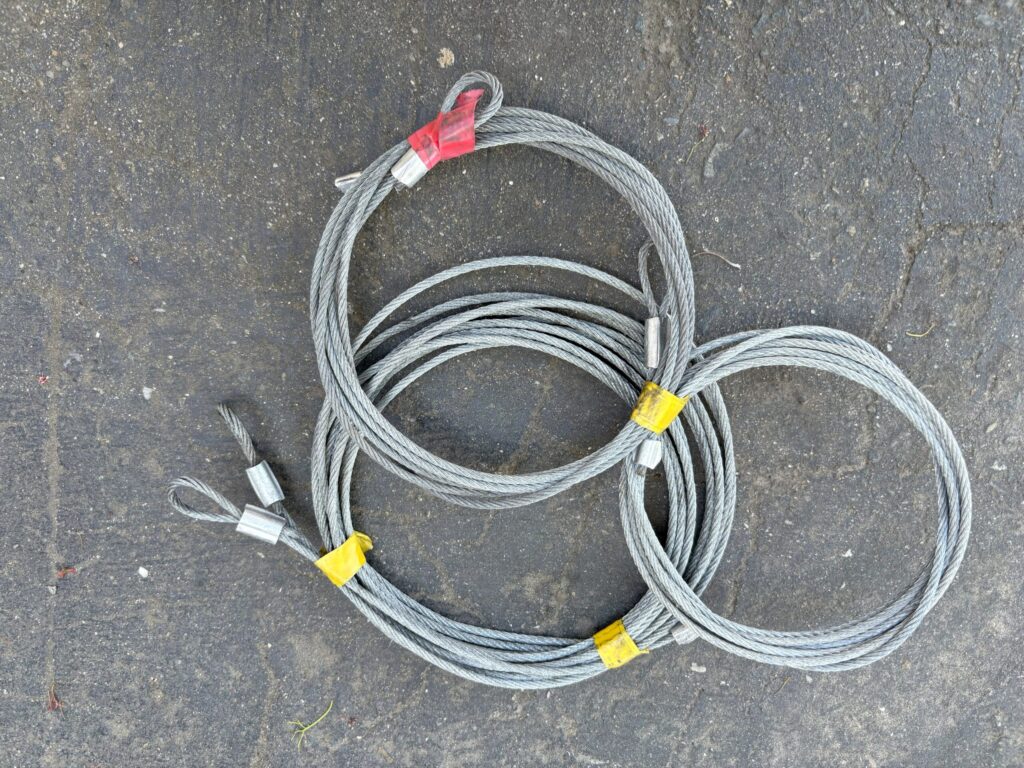
A fall garage door maintenance checklist should help you identify problems before they interrupt daily use, without asking you to repair dangerous hardware. Start with a stationary door, inspect visible components and weather seals, and test normal operation only if the system appears safe. If you notice a broken spring, loose cable, crooked door, or failed safety feature, stop and request professional service.
SCF Garage Doors serves Sacramento and nearby communities, including Arden-Arcade and Carmichael. In this area, fall maintenance is less about preparing for months of ice and more about catching a dragging door, damaged seal, or unreliable safety feature before you depend on it every day.
The six checks below separate routine homeowner care from conditions that require a trained garage door technician.
Before Step One: Know When to Stop Using the Garage Door
Before cleaning or testing anything, examine the garage door’s current condition. If it hangs crookedly, feels unusually heavy, has a broken spring, or shows a loose or frayed lifting cable, do not use it until a trained technician has inspected the system.
Never disconnect the opener to test the door’s weight or attempt to adjust springs, cables, drums, or bottom brackets. The Door & Access Systems Manufacturers Association (DASMA) warns that these components operate under high tension and that spring-system repairs and cable replacement require trained technicians.
Keep children, pets, and vehicles away from the garage door opening during any permitted operating test. If the door appears damaged or the opening cannot be kept clear, skip the remaining checks and arrange service instead of trying to complete the entire checklist.
What Does Your Garage Door’s Condition Tell You?
| What You Notice | Recommended Next Step |
| Door sits level and visible hardware appears intact | Continue with the checklist, following the manufacturer’s instructions |
| Torn seal or debris at the threshold, but the door is otherwise sound | Remove safely accessible debris and consider a seal assessment |
| Crooked door, cable off its drum, broken spring, or unusually heavy movement | Stop using the door and request professional inspection |
| Door fails a safety-reversal or photoelectric sensor test | Stop using the automatic opener and arrange qualified service |
This table helps identify the appropriate next step, but it doesn’t replace a professional inspection. A garage door may appear normal while still having developing mechanical problems, so pay attention to changes in its usual movement, sound, or response.
Your 6-Step Fall Garage Door Maintenance Checklist
Use these checks in order. Begin with the garage door closed and stationary, and don’t proceed to moving-door tests if an earlier step reveals a serious concern.
Step 1: Inspect the Bottom Weather Seal and Threshold
With the garage door fully closed, inspect the bottom weather seal from a safe position. Look for flattened rubber, tears, missing sections, or daylight beneath the door. Remove loose leaves and grit from accessible areas around the threshold, but don’t pry beneath the door or pull weatherstripping from its retainer.
Check the perimeter seals along the sides and top of the opening. A small, consistent gap may indicate worn weatherstripping, while a bottom edge that touches the floor on one side but not the other may suggest a positioning or mechanical problem.
Don’t try to correct an uneven door by adjusting cable tension or opener travel settings. A thicker weather seal may hide the gap without addressing its cause, particularly when the garage door isn’t sitting level.
Why this matters in Sacramento
Sacramento’s fall season brings cooler conditions and increasing rainfall, making it a practical time to inspect the threshold. If water collects near the garage entrance, note where it comes from and whether it crosses the floor while the door is closed.
A replacement seal may help address deteriorated weatherstripping, but it won’t correct every drainage problem. Water flowing toward the garage because of grading or runoff may require attention beyond the door itself.
Decision: If the seal is worn and the door remains level and mechanically sound, consider a compatible replacement. If the bottom edge is uneven, the door binds, or hardware appears damaged, stop using it and request an inspection before replacing weatherstripping.
Step 2: Inspect Visible Garage Door Hardware
From the garage floor, scan both vertical tracks, the rollers you can see, hinges, and the cables at the sides. Look for a roller out of its track, a bent rail, a missing fastener, a slack cable, or strands separating from a cable. Use a flashlight rather than climbing or putting a hand near moving parts.
A thin line of dirt in a track is not the same as a bent track. You can remove loose surface debris that you can safely reach while the door is still, but do not loosen the track brackets or pack the track with grease. If a roller has jumped the rail, a cable looks wrong, or the door is skewed, do not use the garage door until a trained technician has inspected it. [1]
Photograph the suspect area from a safe distance. For SCF’s cable repair or roller repair team, a photo of both sides of the door and a close view of the visible concern can help explain the symptom without requiring you to touch it. A photo is not a diagnosis.
Decision: If nothing is bent, detached, or frayed, continue. If any tensioned part looks damaged, skip the remaining operating tests and book service.
Step 3: Observe One Normal Opening and Closing Cycle
Only if the stationary checks pass, stand where you can see the whole opening and operate the door once. Keep the path clear and watch it until the movement finishes. DASMA advises watching an automatically closing garage door until it is fully shut.
Notice whether the door travels evenly, pauses, scrapes, or makes a new sharp sound. You do not need to identify a spring or roller from its noise. The useful report is what changed: “The right side lags near the top” is more helpful than “the motor is bad.”
If the door becomes crooked, jerks, or sounds strained, stop using it. Do not run repeat cycles to reproduce a fault for a video. A stronger opener is not a cure for a heavy or out-of-balance door; DASMA says openers are intended for properly balanced doors. [3]
Decision: Smooth, familiar movement means you can proceed to the safety-feature checks. A new movement problem means arrange a professional diagnosis through SCF’s repair services instead of adjusting hardware yourself.
Step 4: Check the Garage Door Opener’s Safety Features
If the garage door passes the visual and movement checks, locate the instruction manual for your opener model. Follow its procedures for checking the photoelectric sensors and contact-reversal function while keeping children, pets, and other people away from the opening.
Opener models differ in their controls, indicator lights, and testing procedures. Manufacturer-specific instructions should guide these checks rather than relying on a universal testing method. DASMA also recommends keeping the garage door and opener manuals available for reference.
Photoelectric sensor check
Photoelectric sensors are generally positioned near the bottom of the garage door opening to detect obstructions during closing. When the door is closed and stationary, inspect the accessible lenses for dirt, dust, or objects blocking the beam.
If the lenses are safely accessible, gently clean their exposed surfaces with a soft cloth as permitted by the manufacturer. Don’t move sensor brackets, disconnect wiring, bypass protective devices, or change opener force settings to make the garage door close.
Contact-reversal check
The contact-reversal system provides another protective function when the closing garage door contacts an obstruction. Follow the manufacturer’s exact testing procedure using the specified inanimate test object, and keep everyone clear of the opening.
Never use your hand, foot, another person, or a pet to test the closing door. If the system fails its prescribed reversal test, stop using the automatic opener and arrange professional service instead of changing its settings.
If manufacturer-approved sensor cleaning doesn’t resolve the problem, ask SCF about opener repair. A malfunctioning safety feature requires attention even when the garage door otherwise appears to operate normally.
Decision: Passing the prescribed tests confirms that the safety features responded correctly during testing, but it doesn’t guarantee future performance. Follow the manufacturer’s maintenance schedule and DASMA’s monthly safety-check recommendations. If either test fails, stop automatic operation and request service.
5. Separate Lubrication From an Actual Fault
Check the door and opener manuals before applying any product. They identify the model’s lubrication points and any parts that should stay dry. DASMA notes that squeaking springs can be normal, but that observation does not authorize a homeowner to adjust a spring. [2]
Do not spray lubricant into the track as a cure for a dragging roller. Lubricants cannot straighten a rail, replace a worn bearing, or rebalance a door. If you are unsure what a part is, leave it alone and ask for the manual or a technician’s assessment.
This is also a good point to resist the seasonal upsell. If the system is level, quiet enough for your household, and passes its safety tests, you do not need a new opener merely because the calendar says fall. A maintenance visit can still be sensible for inspection, but the reason should be a specific concern or a planned service interval.
Decision: Apply only manufacturer-approved maintenance that you can perform without touching tensioned or electrical components. Persistent scraping or uneven travel calls for diagnosis, not more spray.
Step 6: Record Your Findings Before Scheduling Service
Write down the date, what you saw before the door moved, whether you ran one normal cycle, and whether the safety tests passed. Note the opener model if its label is easy to read without climbing. This turns “the door acts up sometimes” into a useful service brief.
For a concern that does not present a stop sign, collect two or three observations over normal use rather than repeatedly testing the system. Record whether the symptom occurs at the start, middle, or end of travel, and whether it appears during opening, closing, or both. If the door develops a stop sign at any point, do not use it until a trained technician has inspected it.
Ask for a diagnosis that distinguishes a worn seal, roller, opener setting, and balance problem. If a part needs replacement, ask what failed, what work is necessary now, and what can wait. That is a better fall maintenance outcome than paying for a package whose contents you do not understand.
When Should You Book Service, and What Might It Cost?
Routine homeowner checks help identify dirt, worn seals, and changes in operation, but they don’t replace a trained technician’s assessment of mechanical problems. Some conditions require professional attention before the garage door can be operated safely again.
Request professional inspection promptly if you notice:
- A garage door that hangs crookedly or feels unusually heavy.
- A visibly broken spring or damaged lifting cable.
- A roller outside its track.
- New scraping, binding, or jerky movement.
- A failed photoelectric sensor or contact-reversal test.
- An opener that strains or operates unpredictably.
If you notice a serious mechanical warning sign, don’t continue the checklist or operate the garage door while waiting for service. Describe the condition to the technician so the appropriate inspection can be arranged.
For a garage door that remains level and operates normally but has a worn weather seal, a planned maintenance visit may be sufficient. Scheduling urgency should reflect the condition of the system rather than simply the time of year.
How Much Does Fall Garage Door Maintenance Cost in Sacramento?
The cost of fall garage door maintenance depends on the condition of the system and the work required. A routine inspection, weather-seal replacement, opener diagnosis, roller repair, and spring-system repair involve different parts, labor, and service requirements.
Garage door size, opener model, part availability, accessibility, and scheduling can also affect the estimate. A visual checklist cannot provide a reliable repair price without identifying the problem, and an online average may not reflect your specific garage door.
Before scheduling, ask SCF Garage Doors for its current inspection fee and what the visit includes. If repairs are recommended, request an itemized estimate explaining the diagnosed fault, required parts, labor, and any additional work requiring approval.
Compare estimates based on the work included rather than the total price alone. A routine tune-up and a mechanical repair aren’t equivalent services, so clarify which findings require immediate attention and which can be addressed through planned maintenance.
The goal is to understand what failed, why the proposed repair is necessary, and what the work will accomplish. This helps you approve the appropriate service without purchasing replacement parts that an inspection doesn’t show are needed.
Frequently Asked Questions About Fall Garage Door Maintenance
Can I Complete This Fall Garage Door Maintenance Checklist Myself?
You can perform accessible floor-level visual checks, remove loose threshold debris, and follow manufacturer-approved safety testing procedures when the garage door appears mechanically sound. However, springs, cables, drums, bottom brackets, track alignment, electrical wiring, and logic-board repairs require trained technicians. Stop the checklist if damage or abnormal movement is present.
Should I Test My Garage Door’s Balance Myself?
Don’t disconnect the opener or attempt a manual balance test when the garage door is crooked, unusually heavy, damaged, or showing signs of spring or cable problems. A faulty counterbalance system can allow unexpected door movement when released, so ask a technician to evaluate its balance.
Does Every Fall Garage Door Squeak Mean a Spring Is Failing?
No. DASMA notes that springs may squeak during normal operation, so noise alone doesn’t confirm failure. However, a new sharp sound accompanied by uneven or unusually heavy movement can indicate a more serious problem. Stop using the garage door and request inspection rather than attempting spring adjustments.
Can I Put Grease in the Tracks to Help the Rollers?
Don’t use grease to compensate for a bent track, damaged roller, or dragging garage door. Follow the manufacturer’s instructions for approved cleaning and lubrication points. If a roller has left its track or the door moves unevenly, stop operating it and arrange professional service.
What if the Photoelectric Sensors Look Clean but the Door Still Reverses?
If the garage door fails its prescribed safety test or continues reversing unexpectedly, stop using the automatic opener and request diagnosis. Don’t bypass the sensors, hold down a control to defeat protection, or increase force settings to make the door close. A failed protective function requires qualified attention.
How Much Does a Fall Garage Door Inspection Cost?
Ask SCF Garage Doors for its current inspection price and what the appointment includes. A routine maintenance visit may have a different scope from repairs requiring replacement hardware or additional labor. Request an explanation of any recommended work before approving services beyond the initial inspection.
How Often Should I Repeat Garage Door Safety Checks?
Use fall maintenance to establish a baseline, then follow the garage door and opener manufacturers’ instructions for recurring checks. DASMA recommends monthly safety checks rather than waiting until the next seasonal visit. If serious damage, unstable movement, or a failed safety feature appears, stop operating the door and request professional inspection.
Keep the Checklist, Not the Risk
A useful fall garage door maintenance checklist ends with a clear decision: continue normal use, schedule a small maintenance task, or stop operating the system until a technician can inspect it. The purpose is to identify actual problems without disturbing hazardous components or purchasing unnecessary parts.
For Sacramento homeowners, fall is a practical time to examine weather seals, clear debris, observe normal movement, and follow opener safety instructions. These checks can help identify potential concerns as the area transitions toward cooler, wetter weather.
SCF Garage Doors serves Sacramento, Arden-Arcade, Carmichael, and surrounding communities. The team can discuss your observations and help determine whether the garage door needs routine maintenance or professional repair.
Call (916) 818-6123 or use SCF’s service request form to ask about availability and what’s included in the visit. Before approving work, request an explanation of the findings, proposed repairs, and estimated charges.
Keep your garage door safe and reliable by addressing the actual problem, not replacing parts simply because the calendar says fall.