



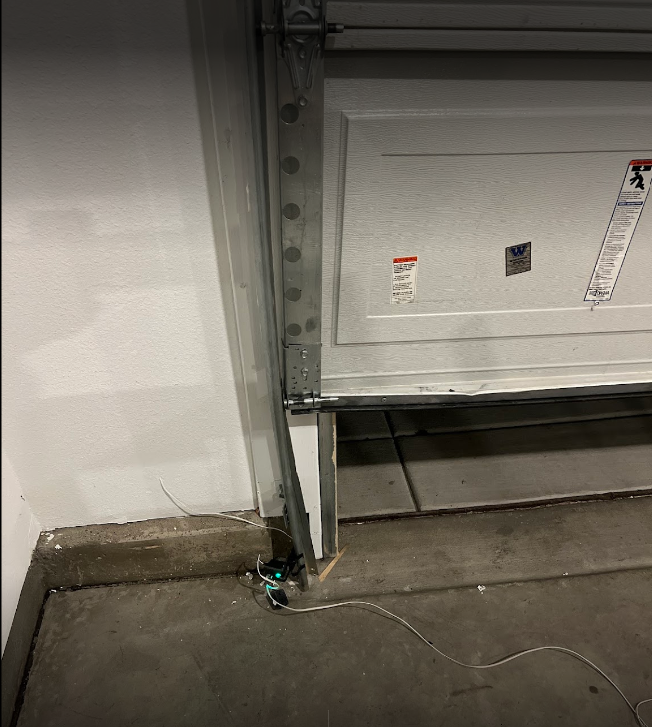
A line of daylight beneath a closed garage door can make you reach for a replacement rubber strip. But the strip is not the first thing to buy. The bottom edge may have a removable seal in a metal retainer, a different attachment on an older door, or a gap caused by the floor or a door that no longer closes evenly. The replacement has to match the actual door and retainer.
SCF Garage Doors serves homeowners in Sacramento, California, and nearby communities. If you want to stop a draft or reduce an opening pests could use, start by finding out where the gap is and what holds the existing seal. That keeps a small weatherproofing project from becoming the wrong part on a door with a larger alignment problem.
The short answer: Inspect a closed, stationary door from a safe position; identify its make, model, and bottom-retainer profile; obtain the manufacturer’s matching replacement instructions; and replace the seal only if those instructions apply to your door and you can perform the work safely. Otherwise, have a garage-door technician identify the correct part and fit it. This is a selection and safety guide, not a universal instruction to lift, clamp, or take apart a garage door.
Before Step One: Is the Door Safe to Approach?
Do not use the garage door until a trained technician has inspected it if the door is crooked, unusually heavy, unbalanced, binding, partly suspended, or has a broken spring, loose or frayed cable, or roller out of its track. Do not pull the opener’s emergency release to make a questionable door easier to work on. Keep people and pets away from the opening.
The Door & Access Systems Manufacturers Association (DASMA) garage-door safety guidance warns that the cables at the bottom brackets connect to the spring system and that worn cables should be replaced only by a trained technician. Do not loosen a bottom bracket, cable attachment, spring, drum, track, or other tensioned hardware to reach a seal. The bottom edge may look like a simple strip, but nearby hardware is not simple trim.
Even on a level-looking door, read the manual for your exact product before attempting removal. A Clopay bottom-weather-seal instruction sheet calls for a door raised to the open position, an opener disengaged, and clamps in both tracks for its specified installation. Those are model-specific instructions, not a safe generic do-it-yourself sequence for an unidentified door. If you cannot identify the door, follow the applicable manual, and safely secure it as that manual requires, leave the replacement to a professional.
First Diagnose the Gap, Not the Material
Look at the door while it is closed and still. Is the daylight even across the width, concentrated in one corner, or visible where two pieces of old seal have separated? Is the strip visibly split, flattened, brittle, or missing from a section? Look without reaching under the door or putting a hand near the cable brackets.
A worn strip is only one possible explanation. An uneven slab may leave a gap beneath an otherwise intact seal. A door that closes unevenly can put more pressure on one end. A damaged or bent retainer may not hold a new strip. Replacing rubber alone will not straighten a door or repair the floor. If you see a new tilt or rough movement, stop using the door until a technician has inspected it.
| What You See on the Closed Door | What to Check Next | What Not to Assume |
| Cracks, tears, or missing sections in the bottom strip | Identify the door and retainer; find a compatible replacement | Any strip sold as a garage-door seal will fit |
| Light at one corner with an intact-looking strip | Compare the floor line and the door’s level appearance from a distance | A thicker strip will correct a crooked door |
| A continuous gap across an uneven slab | Ask whether the floor or threshold needs attention | The door itself must be replaced |
| A seal that repeatedly slides out | Have the retainer and fasteners inspected | Adhesive alone will repair a damaged channel |
| Crooked, heavy, binding, or partly open door | Stop use and request professional inspection | Weatherproofing is the first job |
In Sacramento, a cool or wet morning may make a gap noticeable, but this is not a severe-freeze how-to. The practical questions are whether daylight, moving air, water, or a visible opening is present and what part of the door assembly causes it. No bottom seal guarantees a pest-proof or watertight garage, particularly if the sides, top, floor, or wall penetrations also have gaps.
What Kind of Bottom Seal Does Your Door Use?
The retainer is the piece along the door’s bottom that holds the replaceable weather seal. A new seal needs an attachment profile that fits the existing retainer. Shape, slot spacing, width, and material can vary, even among doors from the same maker. Do not choose a replacement by color or advertised door width alone.
Clopay’s published replacement sheet illustrates two different products: a bulb-shaped astragal for a bulb-style retainer and a U-shaped astragal whose two T-shaped edges slide into corresponding retainer slots. The sheet explicitly says garage doors are manufactured with varying weather-seal retainer designs and directs owners to Clopay for the proper replacement. Its two examples show why identification comes before installation, not that every Clopay door, much less every brand SCF encounters, uses one of these exact parts.
Find the door’s manufacturer and model in your paperwork or a label you can see safely from the floor. If the label cannot be read without climbing, moving an unsafe door, or reaching near a tensioned assembly, do not chase it. Photograph the stationary bottom edge from a safe angle and ask the installer or manufacturer to identify the profile. The part number and current instructions for your exact door outrank a product listing that says “universal.”
A floor threshold is a different product attached to the floor, not an interchangeable replacement for the door’s bottom seal. It may be worth discussing where the slab is uneven or water enters, but its position, drainage, and compatibility with door travel need to be assessed. A taller bottom seal or threshold is not a cure for a door that no longer closes correctly.
How Do You Replace the Seal Once You Have the Correct Instructions?
The safe procedure depends on the door, retainer, and replacement part. Use this as a decision sequence, not a substitute for the manufacturer’s directions:
- Confirm the symptom and fit. Photograph the closed door and old seal, note where the gap appears, and match the make, model, retainer profile, and part number. If the old seal is intact but the door sits crooked, stop here and request an inspection.
- Read the complete matching manual before moving anything. Check its requirements for securing the door, disconnecting automatic operation, removing any seal-retaining fasteners, installing the replacement, trimming excess, and checking operation. Do not borrow a step from another brand or profile.
- Decide whether the specified setup is safe for you. If the instructions require raising and securing a heavy door, working near a cable bracket, removing hardware you cannot identify, or using tools or access you do not have, hire a trained technician. Do not improvise with a prop, ladder, or a second person’s grip.
- Follow only the applicable manufacturer’s installation directions. On the Clopay examples, the replacement engages a particular retainer profile and is slid across the door; even the extra length left at the end is specified for those products. A different door can require a different part or procedure. Do not force a strip into a channel or glue it in place to compensate for a mismatch.
- Check the closed result from a safe position. The seal should contact the floor as intended without making the door strain, reverse, tilt, or leave a new gap. If operation changes, stop using the door until a technician has inspected it. A seal that looks snug is not proof that the door’s safety system or balance is sound.
This is deliberately not a set of instructions to disengage an opener, clamp tracks, or raise a door. Those steps appear in certain manufacturer documents only after the exact product and work setup are known. If that distinction makes the project less convenient, it also keeps a weatherproofing task from turning into a door-support hazard.
Should You Replace the Seal, the Retainer, or the Door?
A visibly worn seal with a sound retainer and normally operating door may need only the correct replacement strip. A bent or corroded channel may require retainer work, not another rubber strip. A door that is damaged or out of alignment needs diagnosis before weatherstripping. SCF’s garage-door repair services cover door problems more broadly, while its track repair page is relevant if movement or alignment has changed.
Replacing an entire door solely because its removable seal is worn would usually be the wrong first question. If sections are damaged, the panel-repair service may be a better conversation. If a door is at the end of its useful life, new-door installation can be discussed after an inspection and a clear comparison of options. The cause of the gap, not the existence of a draft alone, should set the scope.
Ask the technician to explain what is failing: the seal material, retainer, closing position, slab, or a combination. A photograph of the gap when the door is stationary is useful. A photograph cannot establish balance or replace an on-site inspection, but it can help the team ask the right questions before the visit.
What Does Bottom-Seal Replacement Cost?
There is no honest single price for every door. A matching strip for a sound channel is a different job from replacing a damaged retainer, correcting a door fault, or addressing an uneven floor. The door’s width, replacement profile, part availability, access, and whether the door can be safely operated all change the scope. We do not have an approved SCF price range for this specific work, so this article does not quote one or borrow a number from an unrelated service.
Ask whether there is an inspection charge and whether it applies toward approved work. After inspection, request an itemized out-the-door scope that identifies the part, labor, and any separate door or threshold work. Sam, SCF’s owner, describes a hands-on inspection followed by an upfront, itemized quote before approved work. If the existing seal is fine and the slab is the problem, you should hear that instead of being sold the wrong strip.
Frequently Asked Questions
Can I Replace a Garage Door Bottom Seal Myself?
Possibly, if the door is sound, you have the exact matching part and manufacturer instructions, and you can meet those instructions safely. Some documented procedures require raising and securing the door. Do not improvise that step or work around spring-loaded bottom hardware. If the door is crooked, heavy, binding, or has a suspect cable or spring, do not use it until a technician has inspected it.
How Do I Know Which Seal Profile Fits?
Use the door’s make and model, retainer shape, and applicable manufacturer part number. A visual guess from a product photo may not capture the channel spacing. Clopay’s bulb and U-shaped examples are different and expressly warn that retainer designs vary. Ask the manufacturer or installer if the profile remains uncertain.
Will a Thicker Seal Stop Pests and Cold Air?
Not necessarily. A thicker strip cannot straighten a door, repair a bent retainer, or fill every irregularity in an uneven slab. Pests may use other openings, and a seal cannot promise a pest-free or airtight garage. Diagnose the gap before buying a thicker product.
Is a Floor Threshold the Same as a Bottom Seal?
No. A threshold attaches to the floor; a bottom seal attaches to the door’s bottom retainer or another model-specific mounting point. Their fit and effect on door travel differ. Ask a technician to assess the actual floor and door before combining products.
Can I Remove the Bottom Bracket to Get More Room?
No. The lifting cable connects at the bottom bracket. DASMA’s safety guidance explains the danger of the spring system and says cable replacement belongs to a trained technician. Do not loosen the bracket or cable hardware for a seal job.
Why Is There Still Daylight After a New Seal?
Check whether the light is concentrated where the floor dips, the door closes unevenly, or the seal is not held by the retainer. Do not keep cycling a crooked or binding door to test it. A technician can distinguish an unsuitable strip from a door or floor problem.
How Much Should I Budget for the Work?
Ask for a diagnosis and an itemized quote rather than relying on a generic material price. A seal-only job, retainer replacement, door repair, and slab work have different scopes. Confirm the inspection charge and approval terms before work begins.
Ask SCF to Identify the Part Before You Buy It
For Sacramento and nearby Arden-Arcade or Carmichael, SCF Garage Doors can discuss the gap, inspect the door and retainer, and explain the work before you approve it. Bring a safe photo of the closed bottom edge and any door-model paperwork. Call SCF at (916) 818-6123 or use the contact page to ask about an inspection and an itemized out-the-door quote. If the problem is the floor rather than the seal, a candid answer is more useful than a replacement that does not close the gap.