



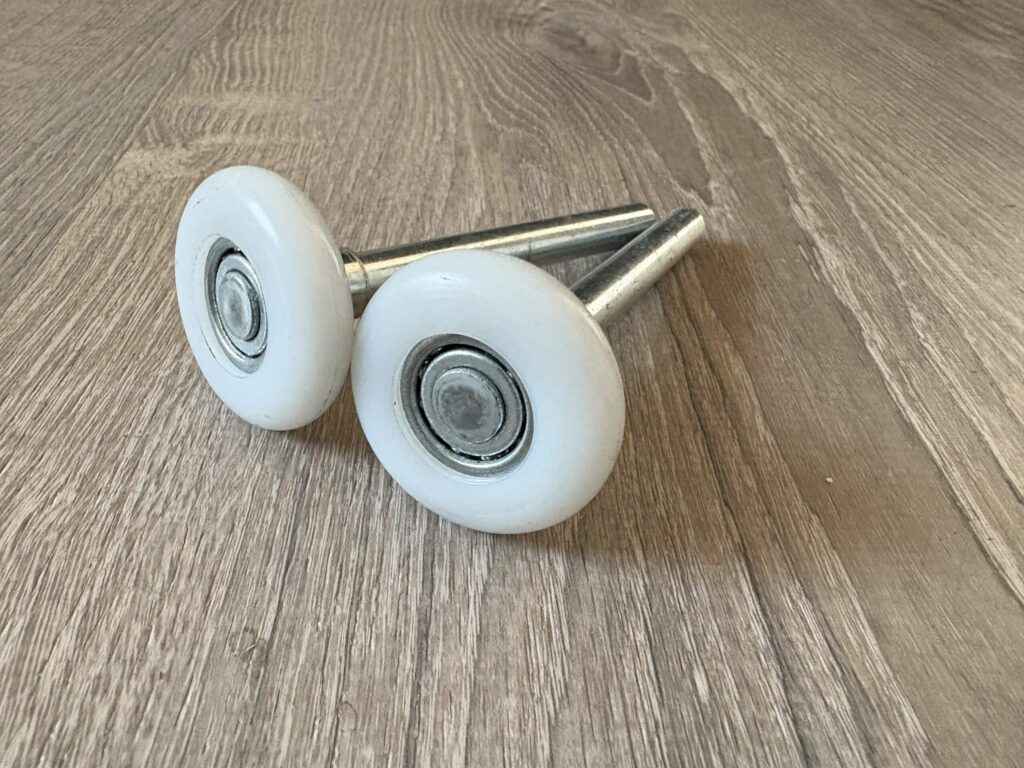
Most homeowners don’t hear their garage door rollers failing. They hear what sounds like the opener struggling or a loose panel rattling. By the time the grinding becomes impossible to ignore, the rollers have usually been wearing for months, quietly pulling the rest of the system down with them.
In our experience, rollers are one of the most underestimated components in a garage door system. They carry the full weight of the door on every single cycle, and when they start to go, the whole door feels it.
This guide walks through the real causes of garage door roller wear, the warning signs that tell you repair is overdue, and what a proper repair looks like from start to finish.
What Garage Door Rollers Actually Do
Rollers sit inside the vertical and horizontal tracks and guide the door through its full range of motion. Every time the door opens or closes, each roller travels the length of the track bearing the door’s weight and keeping it aligned from bottom to top.
Most residential garage doors use nylon or steel rollers. Nylon rollers are the standard choice for home installs because they run quietly and don’t create metal-on-metal contact with the steel track. Steel rollers are more durable under heavy loads but noisier and more susceptible to rust. Both types use ball bearings inside the wheel, and bearing quality determines how long the roller lasts.
On a door cycling four to five times a day, the rollers complete more than 1,500 cycles a year. Standard residential nylon rollers are typically rated for 10,000 to 15,000 cycles depending on bearing quality, putting the average replacement window between seven and ten years, though Sacramento’s heat often shortens that considerably.
The Most Common Causes of Garage Door Roller Wear
In our work across Sacramento and nearby areas, the same causes show up on roller calls again and again.
Lack of lubrication is the leading cause we see in the field. When the bearing inside a nylon roller runs dry, internal friction increases with every cycle. The door starts to sound rough, then begins to drag, and eventually the bearing seizes or the nylon cracks. A mistake we frequently see is homeowners reaching for WD-40 when they first notice the noise. WD-40 is a water displacer, not a lubricant. It evaporates quickly and leaves the bearing drier than before. The correct product is a silicone or lithium-based garage door lubricant applied directly to the roller stems and bearings.
Age and cycle fatigue catches most homeowners off guard. A roller cycling through Sacramento summers where temperatures regularly push past 100 degrees is working in conditions that break down materials faster than the cycle rating accounts for. Heat accelerates bearing wear and causes nylon to become brittle. We’ve seen rollers crack on doors only six or seven years old simply because the original components were builder-grade from installation.
Dirt and debris accumulation is a factor particularly relevant to Sacramento. The dry summers push dust and fine debris into the tracks and around the roller stems. That buildup grinds away at internal components, and a track that looks clean to the eye can still carry enough particulate to shorten roller life by years.
Track misalignment forces rollers to travel a path they weren’t designed for. When a track bends or shifts out of plumb, the roller stem binds against the track edge on every cycle. The wear pattern is immediately recognizable: one side worn more than the other, often with a flat spot where the roller dragged against the track wall.
Door imbalance shifts weight unevenly across the roller set. The lower rollers on the heavy side wear faster, and replacing those without correcting the underlying balance means the same ones fail again within a year.
Warning Signs Your Rollers Need Attention
Grinding or squeaking during operation is the most consistent early warning. A dry bearing produces a metallic grinding sound that changes pitch as the door moves through different sections of the track. Homeowners often describe it as the door sounding like it’s dragging across gravel, which is a fair description of what’s happening inside the bearing.
A door that hesitates or catches at the same point in its travel every time is pointing to a damaged roller in that section. The door doesn’t move unevenly at random. It catches where the bad roller is.
Visible cracking or chipping on nylon rollers signals material fatigue that lubrication won’t fix. This is easy to check by looking at the rollers along the vertical track on either side of the door.
A door that feels heavier than usual when lifted manually is worth investigating. Disconnecting the opener and lifting the door to waist height should result in the door holding position. If it lifts hard and rough, rollers and track friction are often contributing.
How Roller Problems Affect the Rest of the System
When rollers start to fail, the consequences don’t stay contained. The opener takes the first hit. When rollers are dragging instead of rolling, the motor lifts more resistance than it was designed for on every cycle. That extra load shortens the motor’s lifespan and can burn out the drive gear on chain and belt drive systems ahead of schedule.
The tracks absorb the next wave of damage. A roller that’s worn flat drags and catches, bending the track at the points where contact is heaviest. A track damaged by bad rollers often needs straightening during the same service call, adding cost that timely roller repair would have avoided.
We’ve had calls that started as spring replacements and turned into full roller and track inspections once the door was moving and we could see the spring wasn’t the only component working overtime. Roller damage and spring wear tend to develop together.
Nylon vs. Steel Rollers: Which One Is Right for Your Door?
Nylon rollers are the right choice for most residential garage doors in Sacramento. They run quietly and are available in standard and high-cycle versions. The upgrade most worth considering is moving from a standard 10-ball bearing nylon roller to a 13-ball bearing version. The additional bearing surface distributes load more evenly and extends service life under normal residential use.
Steel rollers hold up better under heavier loads, making them more appropriate for larger or heavier custom doors. They’re louder and more prone to rust, and generally not the first recommendation for a standard residential door.
One thing worth noting: builders routinely install the minimum-grade roller to keep upfront costs down. Standard builder-grade rollers are often 7-ball bearing nylon components rated toward the lower end of the cycle range. This is why we see roller wear on doors only five or six years old. The door itself is fine. The original rollers simply weren’t matched to the demands of daily residential use.
What a Professional Garage Door Roller Repair Looks Like
A roller replacement isn’t just a component swap. A thorough repair starts with a full inspection of the rollers, tracks, springs, cables, and door balance before any parts come off the door.
Rollers rarely fail in isolation. Calls that come in as roller repairs frequently reveal a track issue, a cable starting to show wear, or a spring that’s lost enough tension to be contributing to uneven roller load. Identifying those issues before the repair begins means the homeowner leaves with a door that’s genuinely addressed.
The process involves removing the door sections from the track, pulling the worn rollers from the stems and brackets, and installing new rollers matched to the door’s weight and cycle demands. Stems and hinges get inspected at the same time. After installation, the door is lubricated, rehung, and balanced. The opener is tested through several cycles to confirm the motor is running at its intended load. A properly completed roller repair leaves the door running noticeably quieter and smoother than before.
How to Extend the Life of Your Garage Door Rollers
Annual professional lubrication is the single most effective step. A technician applies the correct product to the roller stems and bearings, not the tracks, which is a common mistake that attracts debris rather than reduces friction. Done consistently, proper lubrication adds years to the life of a standard residential roller set.
Keeping the tracks clear matters more in Sacramento than in most markets. Dust accumulates faster during the dry months, and a quick wipe of the track interior every few months removes particulates that work into the bearings.
In our experience, the doors that hold up longest between repairs are almost always the ones receiving consistent annual maintenance.
Keep Your Garage Door Running Smoothly With SCF Garage Doors
Garage door roller repair is one of the most direct ways to restore quiet, smooth operation to a struggling door and protect every other component from the wear bad rollers cause. The longer roller damage goes unaddressed, the more of the system it pulls into the problem.
SCF Garage Doors is a family-owned team serving Sacramento, Citrus Heights, Folsom, Rancho Cordova, Carmichael, and nearby areas. If your door has been grinding, hesitating, or feeling heavier than it used to, reach out to SCF Garage Doors for an honest assessment from a licensed local team that takes the time to do the job right.