



Most homeowners hear the sound before they understand what caused it. A loud bang from the garage followed by a door that won’t lift or sits crooked in the frame. The instinct is to blame the opener. In our experience, a snapped cable is one of the most startling garage door failures a homeowner encounters because it happens fast and leaves the door immediately unsafe to operate.
What most homeowners don’t realize is that the snap is rarely the beginning of the problem. The cable had been showing wear for weeks or months before it failed. Understanding what a garage door repair cable replacement involves is the difference between fixing the real issue and setting up for a second failure.
What Garage Door Cables Actually Do
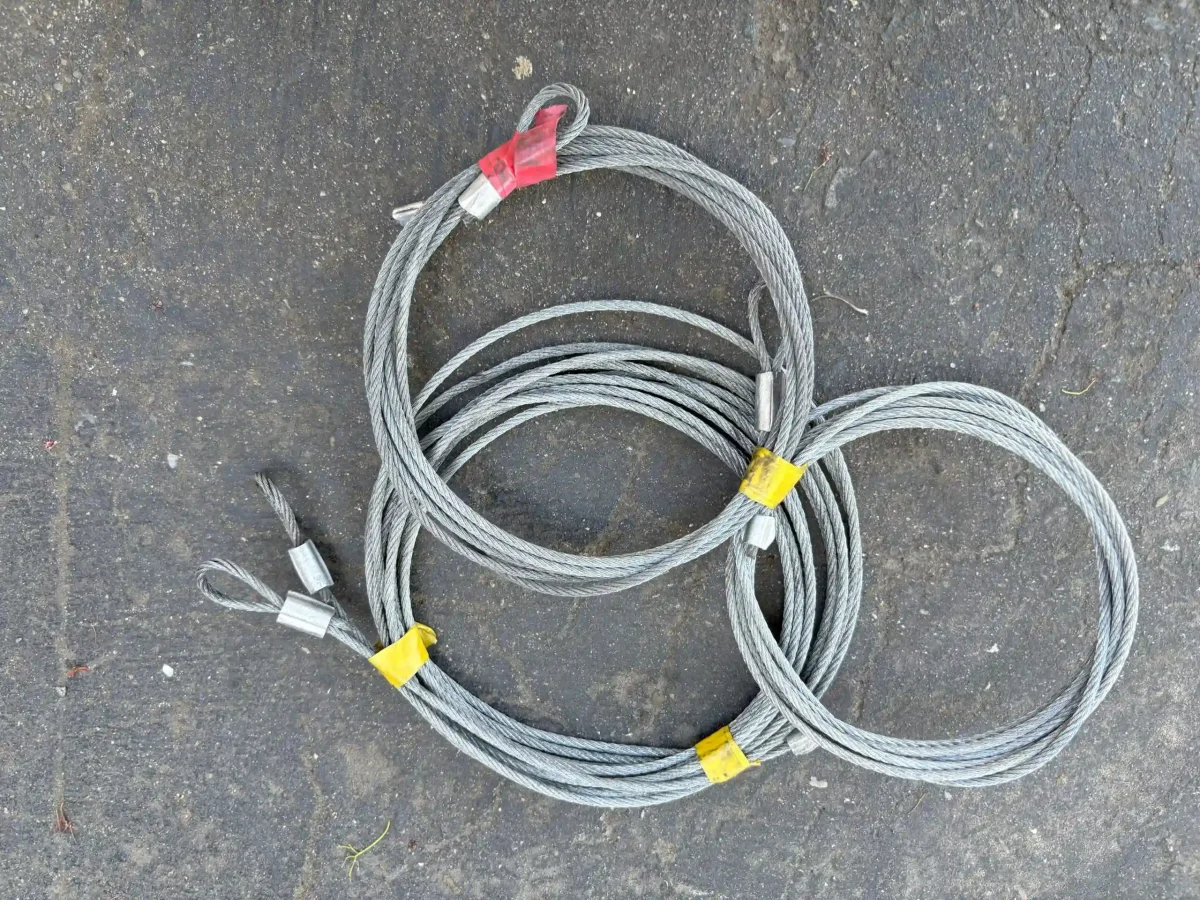
Cables are the steel braided lines that run from the bottom brackets at the base of each side of the door, up through pulleys, and wrap around drums mounted on the torsion shaft above the door opening. They work in tandem with the torsion spring system to carry the door’s weight through every open-and-close cycle. The spring stores the mechanical energy, and the cables transfer that energy into controlled, balanced door movement.
The load each cable manages is significant. On a standard two-car insulated steel door, the total door weight typically falls between 200 and 400 pounds, meaning each cable manages roughly half that load on every single lift cycle. That context reframes what a cable snap actually is, which is the sudden loss of load-bearing capacity on one side of a door that weighs as much as several large appliances stacked together.
What Happens the Moment a Cable Snaps
When a cable fails, three things happen in rapid sequence, and each creates its own set of consequences.
The door loses balanced support on the side where the cable failed. The opposing cable is now carrying the full load it was never designed to carry alone, creating an immediate imbalance that tilts or drops the door on the failed side and puts the rollers and tracks under lateral stress they were not designed to absorb.
The spring system loses its load path. On a torsion spring system, the spring’s stored tension transfers through the drums and cables into controlled door movement. When a cable snaps, that transfer path breaks on one side, placing abnormal stress on the torsion shaft, the drums, and the remaining cable.
If the opener is running when the cable snaps, the motor continues to cycle against a door that is no longer moving correctly. The load-sensing mechanism will eventually stop the motor, but the interval before detection is long enough to cause real damage to the drive gear or belt.
The loud bang homeowners report is the cable itself parting under tension, not the door hitting anything. That percussive sound carries through the entire structure of the garage.
Why the Door Becomes Unsafe to Use Immediately
A door with a snapped cable should not be operated until the repair is complete. There are specific mechanical reasons it becomes dangerous the moment a cable fails.
A door missing cable support on one side can come off the track if the opener attempts to lift it. The rollers on the unsupported side are no longer following the track geometry the door was designed for. A partial derailment can happen faster than the motor’s load sensing can respond, and a door that partially comes off the track can fall. A residential garage door weighing 130 to over 400 pounds falling without controlled cable support is a serious injury and property damage risk.
The second risk is the remaining cable. Once one snaps, the load imbalance puts the opposing cable under stress beyond its rated load. A second failure in the hours or days following the first is not uncommon when the root cause was present on both cables simultaneously. Fraying from age does not typically affect only one cable. Both share the same cycle count, environmental exposure, and wear timeline.
What Causes Garage Door Cables to Snap
Cable failures follow predictable patterns, and in our work across Sacramento and nearby areas, the same root causes appear on almost every cable replacement call.
Fraying from age and cycle fatigue is the most common cause we see. Standard residential lift cables are manufactured from galvanized steel wire strands twisted into a braided line. As the cable accumulates cycles, the individual wire strands fatigue at the point of maximum stress, which on a torsion spring system is where the cable attaches to the bottom bracket. A cable fraying at the bracket attachment point is typically weeks or days from snapping, and it is consistently visible to a trained eye during a routine inspection.
Improper cable sizing for door weight is a cause we see most often on builder-grade installations. Cables are rated for specific load ranges, and a cable undersized for the door it is lifting fatigues faster and reaches failure ahead of its expected service life. We have replaced cables on doors only five or six years old where the original cable was not matched to the door’s actual weight.
Drum misalignment is a consistent cause that gets overlooked. When the cable drum is not properly aligned with the cable path, the cable wraps at a slight angle on every cycle, wearing the outer strands unevenly and accelerating toward failure.
Sacramento’s seasonal weather adds a climate-specific factor. Winter rain events and garages that do not fully seal against moisture degrade the galvanized coating on cables over time, particularly at the anchor points where moisture collects between the wet season and the dry summer months that follow.
What a Professional Garage Door Repair Cable Replacement Involves
A cable replacement done correctly covers significantly more than swapping the snapped line. When we arrive on a cable call, the inspection starts with the full cable system on both sides, the drum condition, the bottom brackets, spring tension, and overall door balance.
Cable failures almost never happen in isolation. The drum the snapped cable was wrapping around frequently shows wear grooves or misalignment that contributed to the failure. Replacing the cable without addressing a compromised drum means the new cable starts its service life in the same conditions that failed the last one.
On a call involving a double-wide door with a snapped lift cable, the repair extended beyond the cable itself. Once the new cables were installed, spring tension needed adjustment to restore balance, and the opener load required recalibration to match the adjusted system. A cable replacement that skips the balance check and opener calibration leaves a new cable running in a system that is still not set up correctly.
Every garage door cable replacement we complete is backed by our 90-day labor warranty, covering defects in workmanship related to the service performed.
Why Both Cables Should Be Replaced at the Same Time
This is one of the most consistent recommendations we make on cable replacement calls, and one of the most frequently questioned by homeowners looking to reduce the immediate cost.
Cables on the same door are installed at the same time, share the same cycle count, and experience the same environmental conditions. When one fails from fatigue, the other is typically at or approaching the same fatigue threshold. The fraying that caused the first snap is usually present on the second cable in a less advanced stage.
The pattern we encounter most often on second cable failure calls is a homeowner who replaced one cable and declined the recommendation to replace both. The second cable fails within weeks to a few months. Two service calls and two sets of labor almost always cost more than replacing both cables at the first visit.
How to Prevent Cable Failure Before It Happens
Annual professional maintenance is the single most effective step for extending cable life and catching wear before it reaches the failure point.
During a routine tune-up, a technician inspects the cables at the anchor points and along the full run for fraying, corrosion, and drum misalignment. A cable showing early fraying at the bracket is a scheduled replacement on a planned call rather than an emergency. We have caught cables on Sacramento-area tune-up visits close enough to failure that the homeowner would have experienced a snap within weeks.
Sacramento’s seasonal moisture adds a specific consideration. Winter rain events accelerate corrosion at cable anchor points in garages without full perimeter sealing, and the dry summer months that follow do not reverse the damage already caused to the galvanized coating. Annual cable inspections matter more for Sacramento homeowners than standard maintenance guidance accounts for.
Get Your Cables Inspected With SCF Garage Doors
A snapped garage door cable rewards immediate professional attention and penalizes continued operation of the door. Whether your cable has already snapped or you want an inspection before one does, the right move is getting a licensed local team to assess the full cable system, not just the visible symptom.
SCF Garage Doors is a family-owned team licensed under CSLB #1082232, serving Sacramento, Citrus Heights, Folsom, El Dorado Hills, Rancho Cordova, Carmichael, and nearby areas. SCF Garage Doors is available 24/7 for emergency garage door repairs. If your door is sitting crooked, won’t lift, or you heard that bang from the garage, reach out to SCF Garage Doors for an honest assessment and quality garage door repair cable replacement from a local team that stands behind every job.